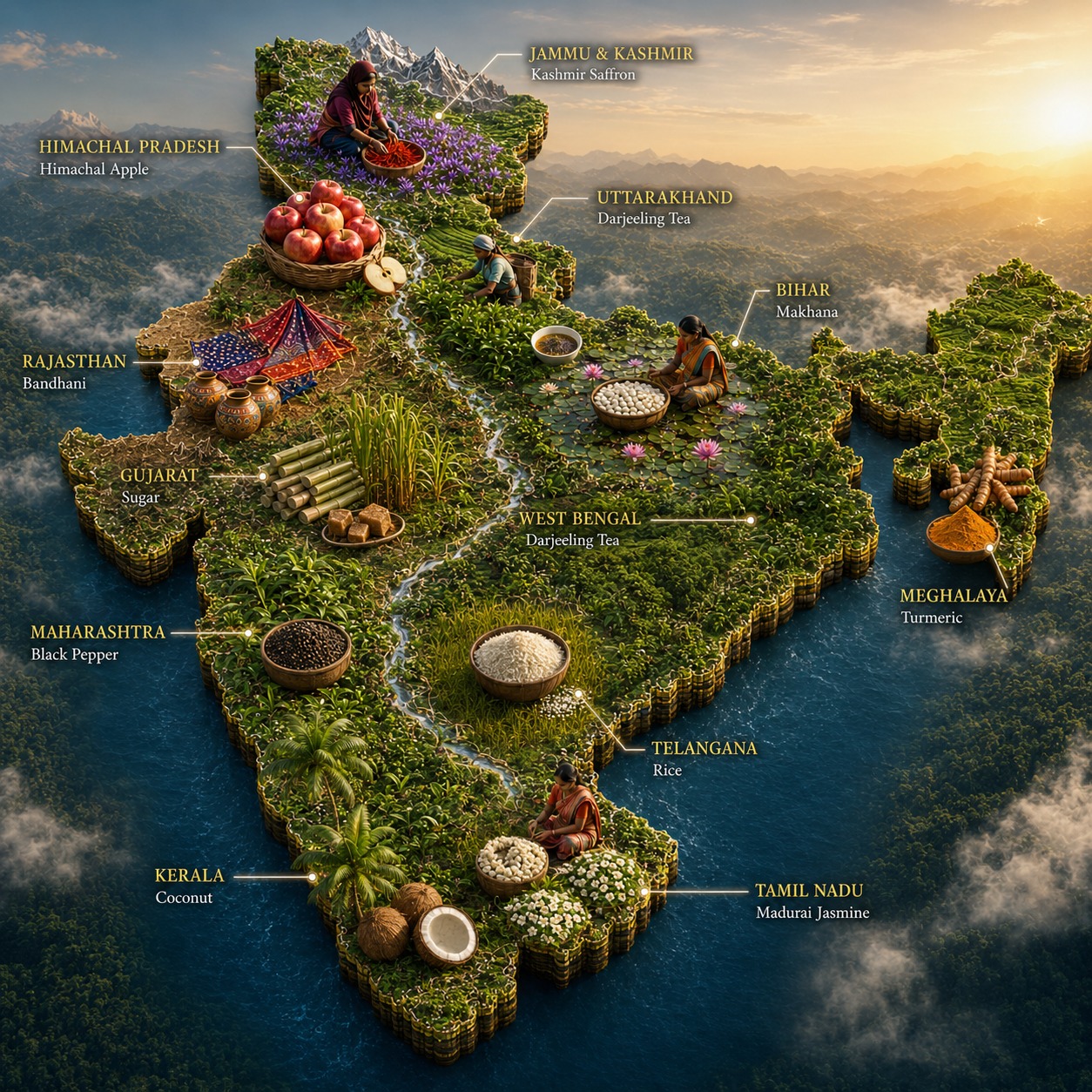
91GI is India's first curated marketplace for Geographical Indication products — sixty-plus heritage foods, each protected by law, sourced direct from origin.
For decades, India's most extraordinary foods — saffron from a single Kashmir village, turmeric from one Meghalaya hilltop, makhana hand-popped on Mithila sand — have been hard to find unless you knew someone, somewhere.
Meanwhile, the farmers who carry these traditions through hard summers and harder winters have been paid less than what their crops deserve, while imitators in distant markets profit from the names they built.
91GI was started to break that chain — to put protected-origin Indian products in one beautiful, honest place, and to pay the people behind them the respect, and the price, they have earned.
A Geographical Indication tag is the Indian government's legal certification that a particular product owes its character, quality, or reputation to the specific region it comes from.
Darjeeling tea cannot be grown elsewhere and called Darjeeling. Kashmir saffron cannot come from Iran. A Lakadong turmeric grown in another state simply isn't Lakadong — the soil, the altitude, the people, the practice all matter.
Today, India has nearly 600 GI-tagged products. 91GI is committed to bringing the very best of them — the foods, the spices, the staples — to your home.
Every product on 91GI is sourced from the village, taluka, or district that owns its GI tag. We hold paperwork on file for every batch — and will share it on request.
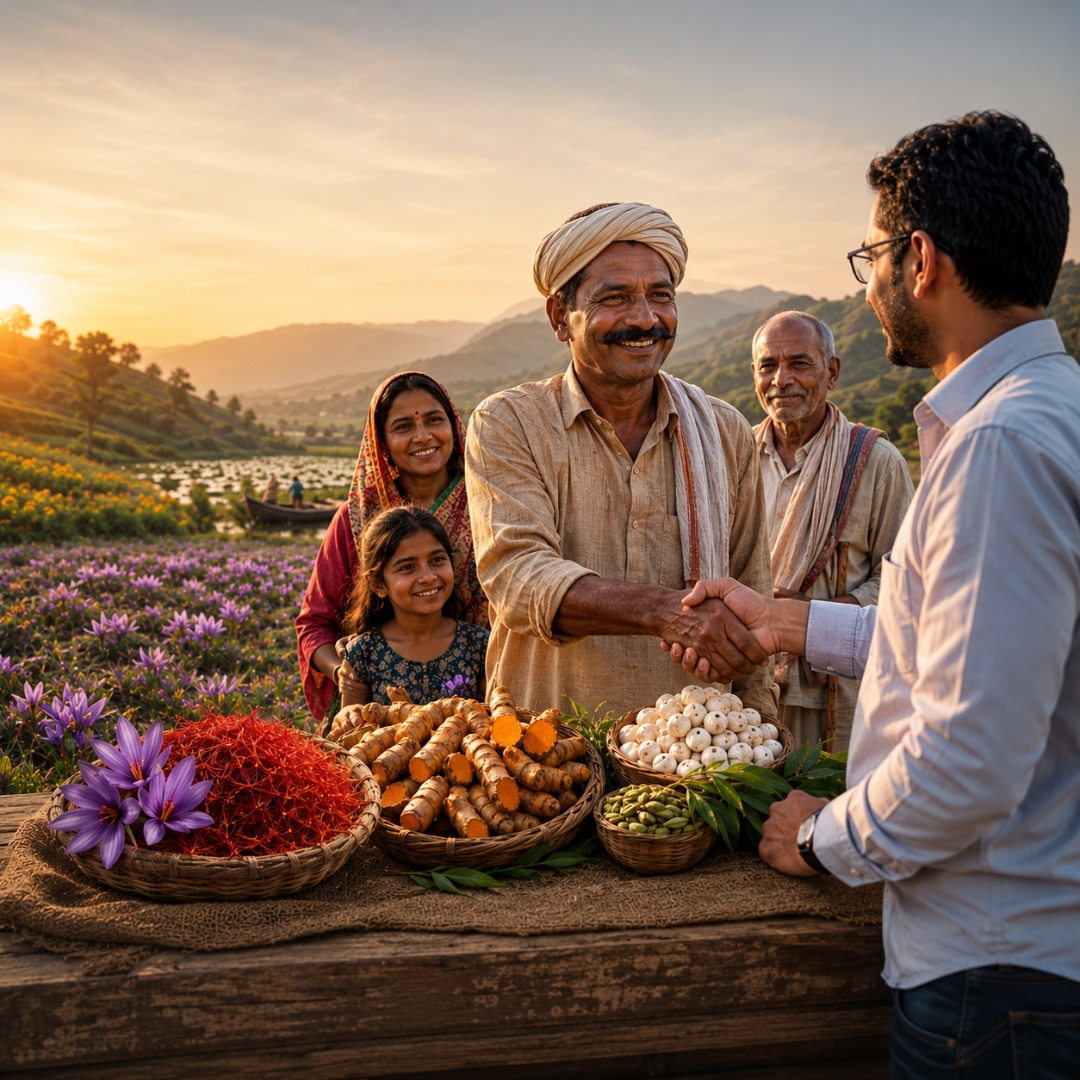
We pay above-mandi rates for what we buy, and we publish the names of our partner FPOs and cooperatives. No anonymous sourcing. No race-to-the-bottom buying.
The stories on our product pages are real — written from village visits, conversations with growers, and verified with state agricultural departments. No marketing fluff. No invented heritage.
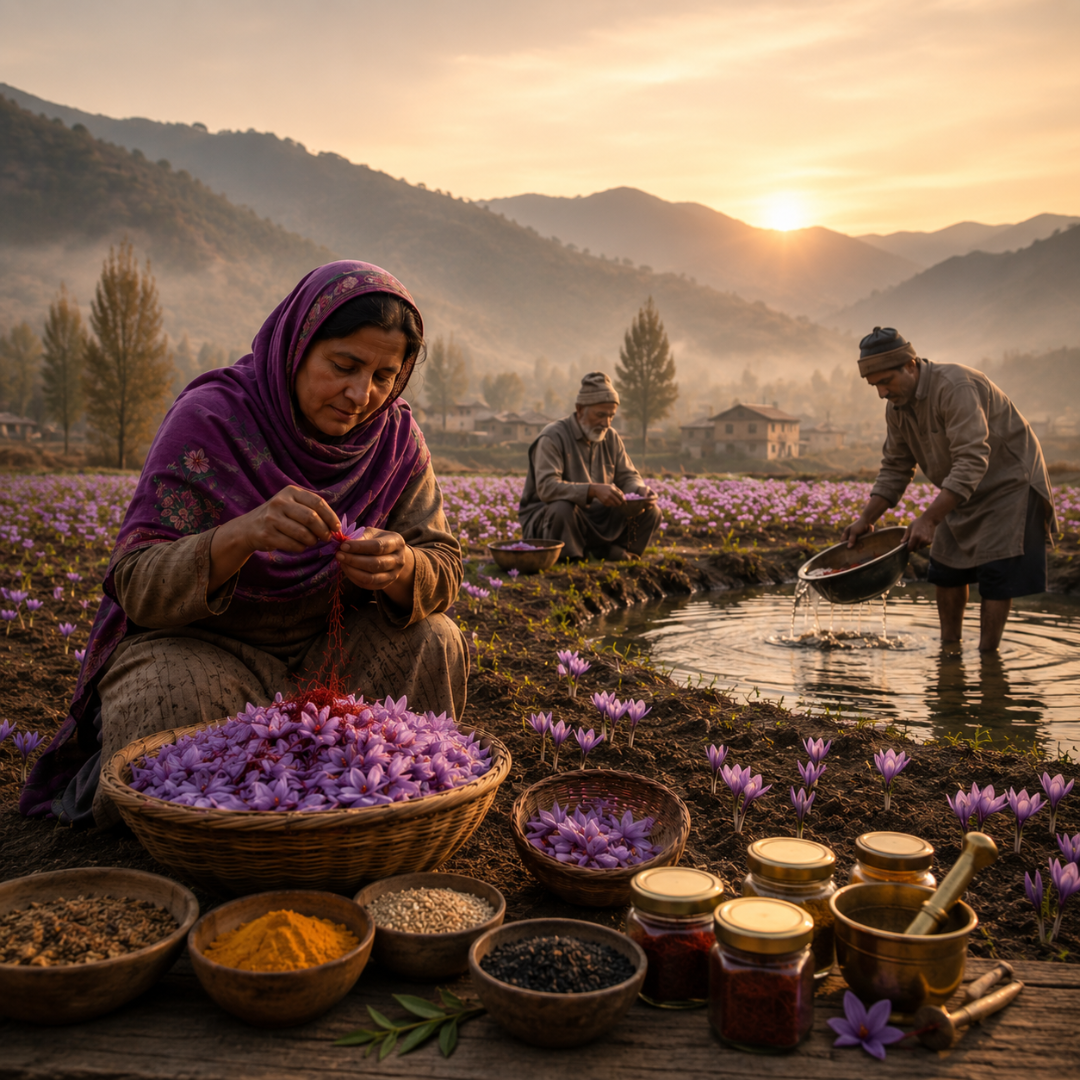
In Pampore, just outside Srinagar, a saffron grower wakes before dawn during the three-week harvest. The crocus opens for only a few hours. She and her family pluck the violet flowers, pull the red threads, dry them slowly.
In a Mithila village in Bihar, a man stands in waist-deep pond water for hours, gathering foxnut seeds with his feet. Then he pops them by hand on a hot pan of sand — one at a time. A skill his father taught him.
These are the people we partner with. They do work that the world has forgotten how to do. We carry their work to you — and bring their share back to them.
Start browsing by category, by state, or by what your kitchen is missing today.